6.900 - MITOSIS
It's getting hot in here...
Project Details / Background
For MIT's 6.900 Engineering for Impact class, my team was partnered
with MIT's Office of Sustainability (MITOS). The goal of the project
was to develop a set of low-cost, interconnected sensor nodes to be
placed across MIT’s campus to measure urban heat island effect. Our
team of 8 undergrads designed it over 12 weeks, focusing on accurate
temperature and humidity data, portability, low-power, and community
engagement through a web platform.
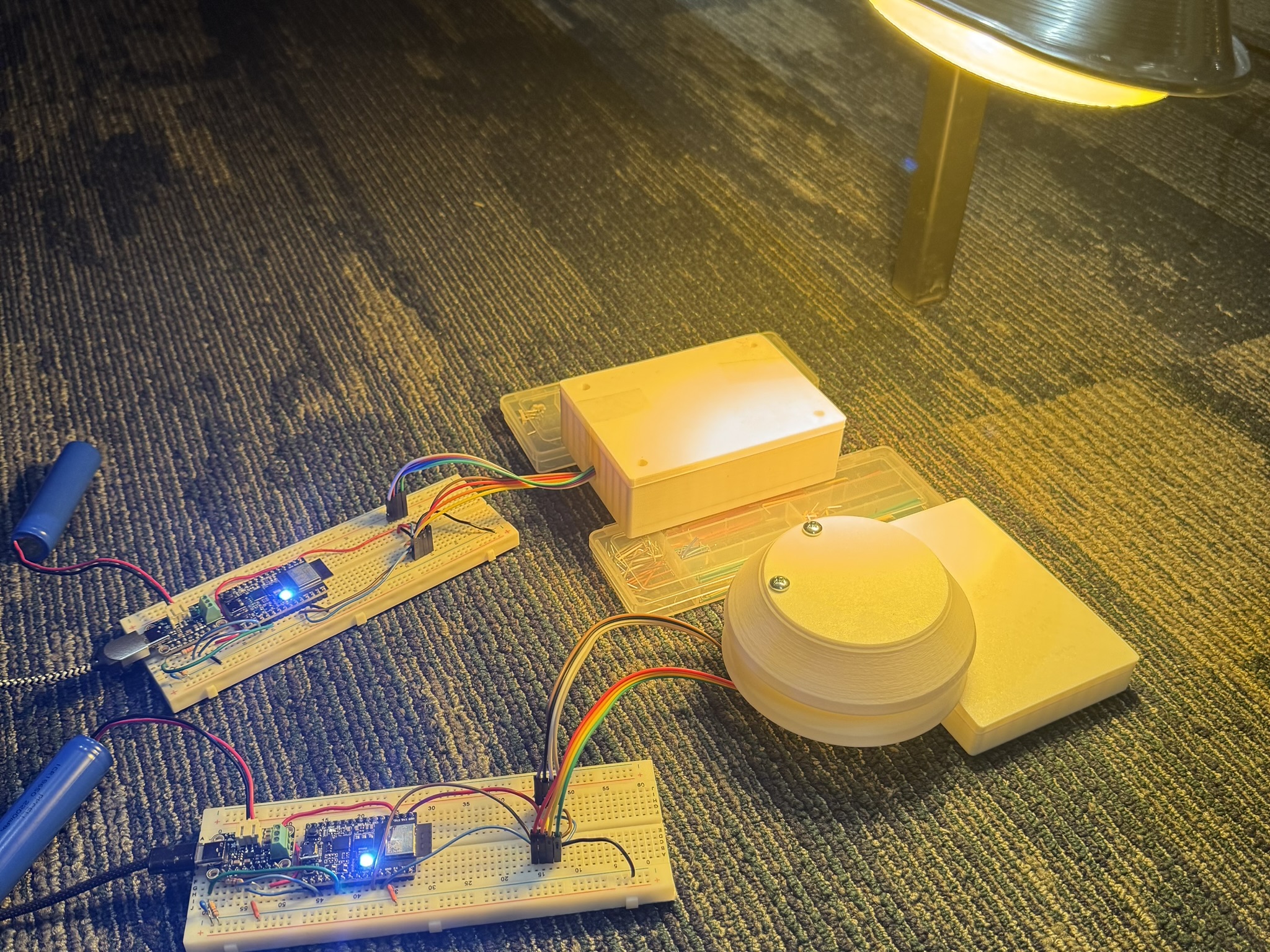
Testing effect of enclosure on sensor accuracy with heat lamp
We enjoyed plenty of creative freedom, sourcing parts from Digikey, Mouser, etc. to our liking, within budget limits. We did face tough design challenges, such as omitting a wind-sensor due to cost, power, and maintenance issues. Regular design reviews and client feedback shaped our final product, ensuring it met MIT's needs effectively.
I enjoyed the hands-on experience of designing a product from
scratch, collaborating with a diverse team, and applying engineering
principles to solve real-world problems. Throughout, I developed
both technical skills—like system modeling and PCB design—and
valuable soft skills in teamwork, problem-solving, and client
communication.
Image Gallery
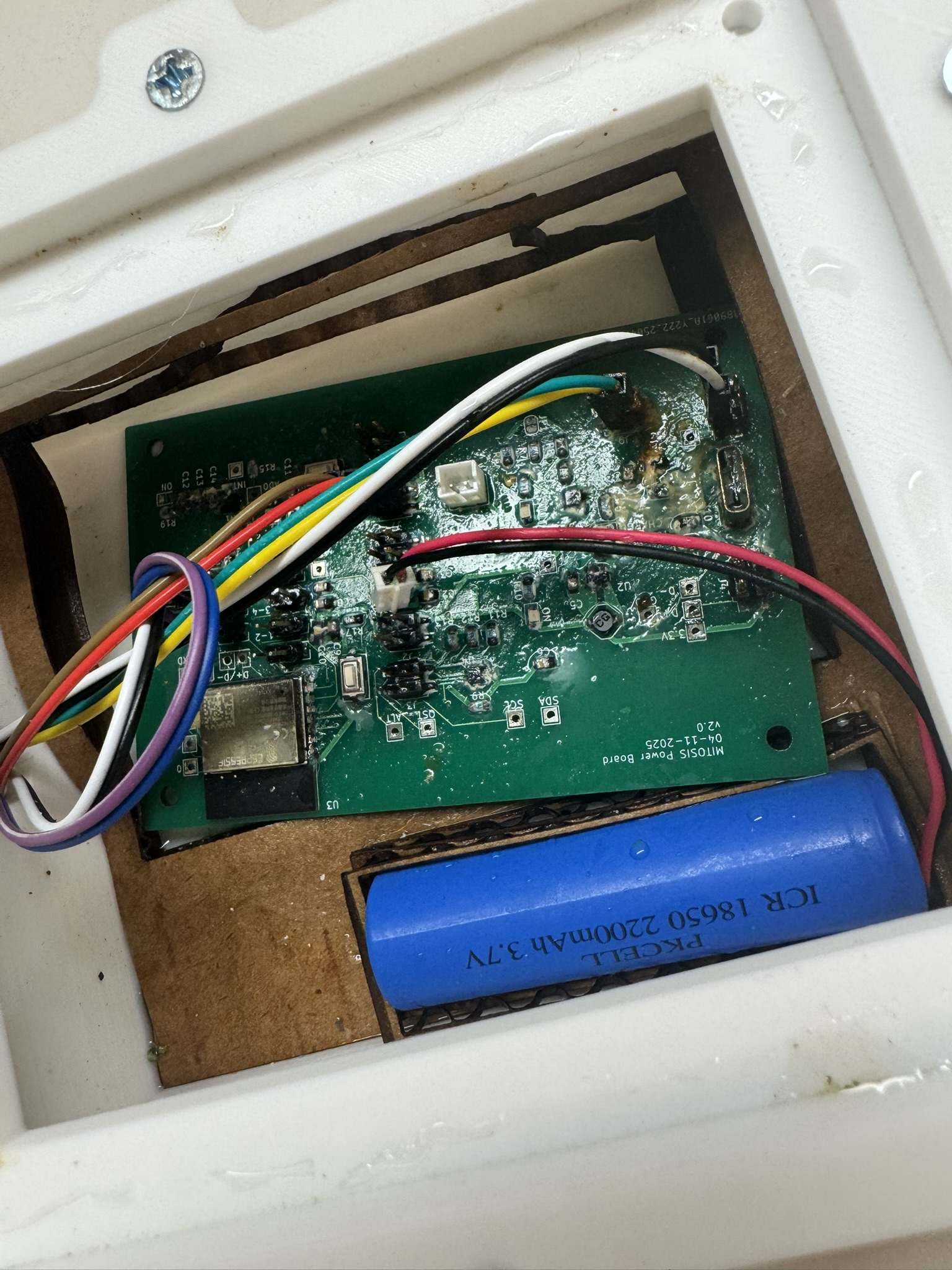 when we didn't properly secure the enclosure and forgot to bring
it before a storm...
when we didn't properly secure the enclosure and forgot to bring
it before a storm...
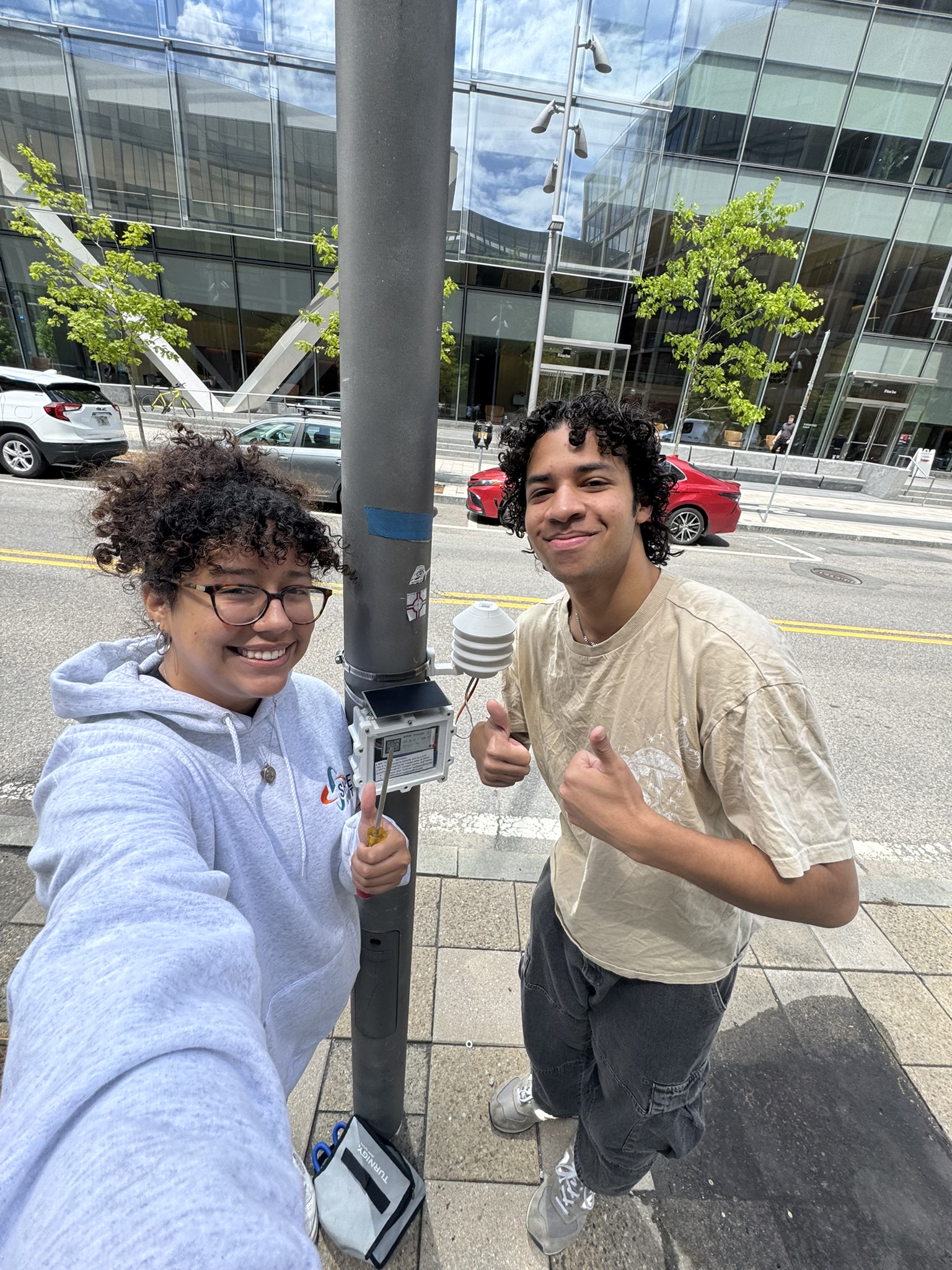 setting up our first unit outside the EECS building!